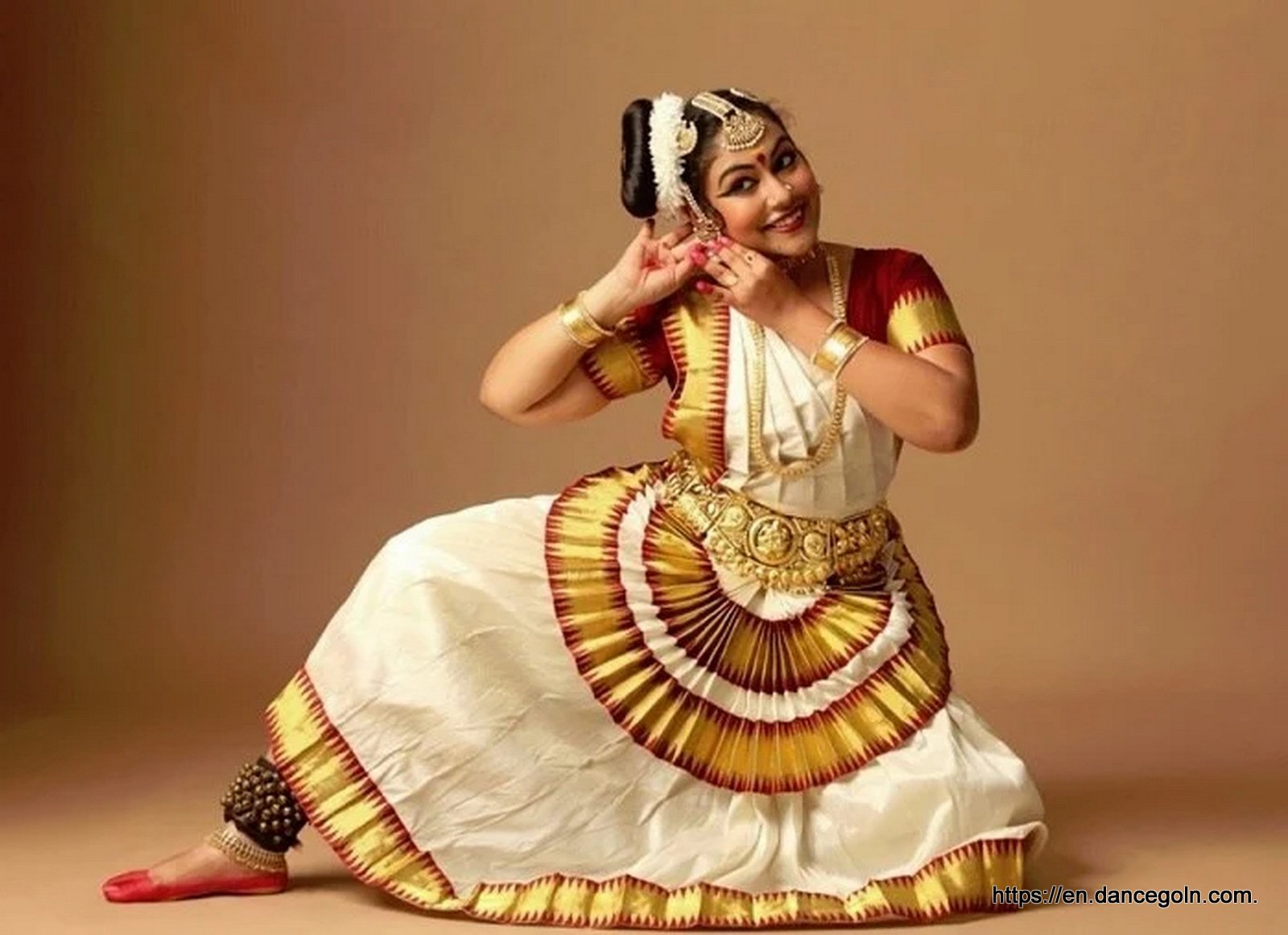
The relationship between human life and dance has been inseparable since the dawn of civilisation. From birth to death, every act, emotion, joy, and sorrow of humankind carries an inherent rhythm—a pulse that defines existence. This rhythm finds its most expressive form in dance. Dance is not merely an art; it is the earliest language of human self-expression—seen since the beginning of humanity as a symbolic manifestation of joy, worship, grief, warfare, and fertility.
Table of Contents
Origins of Dance in Primitive Times
In prehistoric times, humans lived in harmony with nature, immersed in religious beliefs and a deep reverence for mysterious forces. They believed that thunder, rain, hunting success, or death were all governed by divine will. To please these deities, they expressed devotion through rhythmic movements, gestures, and bodily expressions—acts that eventually evolved into the earliest forms of dance.
Before the discovery of spoken language, communication took place through the eyes, face, hands, and body. Jumping in joy, bowing in sorrow, or stepping back in fear—each of these was a primal form of dance expression. As the philosopher R. N. Edman remarked:
“Where life can express itself, there art is born.”
Thus, dance is the natural expression of life—an art that predates language itself.
The Emergence of Music, Rhythm, and Civilisation
When humankind learnt to light fire and craft weapons from stone, a sense of rhythm and sound was born within. Whether celebrating a successful hunt or the harvest, people clapped, stamped their feet, and used vocal sounds to express collective joy. These spontaneous gestures and cries gradually took structured form, giving birth to the composite art of music, dance, and rhythm.
As civilisation progressed, human beings refined their means of expression. Bodily movement, facial expression, and gesture became conscious forms of aesthetic communication. Over time, these evolved into organised systems of dance that earned recognition as a refined art form.
Dance in the Spiritual Tradition of India
India has always been a land of spirituality, where art is seen not merely as entertainment but as a path to liberation (moksha). In Indian philosophy, dance is not just an art—it is a form of yoga, known as Nritta Yoga.
According to Hindu mythology, the divine origin of dance lies with Lord Shiva, the eternal cosmic dancer or Nataraja, who performs the dance of creation, preservation, and destruction. It is believed that Lord Brahma received the knowledge of music and theatre from Shiva, which was later passed on to sages such as Bharata Muni, Narada, Tumburu, and Saraswati—the goddess of learning and the presiding deity of the arts, often depicted as Veena Pani (the goddess with the veena).
Tandava and Lasya: The Dual Forms of Dance
According to scripture, after the destruction of the demon Tripurasura, Lord Shiva danced in divine ecstasy—a vigorous and powerful dance known as Tandava. In contrast, Parvati, his consort, performed a gentle, graceful, and romantic dance called Lasya.
These two forms—Tandava and Lasya—form the philosophical and aesthetic foundation of Indian classical dance. Later traditions such as Kathak, Bharatanatyam, Odissi, Kuchipudi, and Manipuri emerged as exquisite blends of these two emotional streams.
The Natya Shastra and the Philosophy of Dance
The earliest scientific treatise on Indian theatre and dance is Bharata Muni’s Natya Shastra. According to legend, during the Treta Yuga, Lord Indra appealed to Brahma for an art form that could offer pleasure and relieve human suffering.
Brahma created Natya Veda, the “Fifth Veda”, by combining elements from the four Vedas: Pathya (recitation) from the Rigveda, Gita (song) from the Samaveda, Abhinaya (gesture) from the Yajurveda, and Rasa (emotion) from the Atharvaveda. Thus, music, dance, and drama became the three essential elements of performing art—a trinity that remains the soul of Indian aesthetics to this day.
Archaeological Evidence of Dance
Historians believe that dance existed even in pre-Vedic times. Archaeological discoveries from the Harappan and Mohenjo-Daro civilisations provide evidence of ancient dance practices. The most famous example is the “Dancing Girl of Mohenjo-Daro”—a bronze statue of a young woman standing confidently with one hand on her hip and a slight bend in her leg. Her poised expression and graceful stance testify that dance was already a vital form of self-expression in that era.
Other artefacts—such as seals, pottery engravings, and musical instruments—also indicate the existence of a vibrant cultural tradition of music and dance.
Dance in the Light of Science and Philosophy
From a scientific standpoint, dance is a natural biological rhythm of the human body—rooted in heartbeat, breath, and movement. Psychologists describe it as “the language of the mind spoken through the body.” Philosophically, it represents the union of the soul with the divine.
In Indian aesthetics, dance embodies the fusion of thought and emotion—where rhythm, tempo, melody, gesture, sentiment, and expression unite to create inner bliss. Hence, dance has often been described as:
“The rhythm of the soul expressed through the music of the body.”
Chronological Evolution of Dance (Timeline of Dance Evolution)
1. Prehistoric Period (Around 5000 BCE or earlier)
Human beings had not yet mastered spoken language.
They expressed joy, fear, gratitude, or prayers for rain through bodily gestures—clapping, jumping, and stamping rhythmic steps.
Dance was an integral part of religious rituals, magical practices, and worship.
The “Dancing Girl of Mohenjo-Daro”—a bronze figurine discovered through archaeology—stands as one of the finest examples of this era’s artistic and rhythmic expression.
2. Vedic Period (Approx. 1500 – 500 BCE)
During the age of Vedic civilisation, dance, music, and instrumental rhythm evolved together.
References to music and dance are found in the Rigveda and Samaveda.
Dance was a vital component of religious sacrifices (yajnas), temple worship, and festive celebrations.
It was regarded as a divine expression of joy in honour of the gods.
3. Puranic and Spiritual Period (500 BCE – 200 CE)
In this era, dance became deeply rooted in divine mythology.
Lord Shiva’s Tandava and Goddess Parvati’s Lasya came to symbolise creation, preservation, and dissolution—the cosmic rhythm of the universe.
The concept of Natya Veda, created by Brahma, was born during this time—uniting song, dance, and drama into what became known as the “Fifth Veda.”
Dance and music began to be viewed as sacred spiritual disciplines.
4. The Natya Shastra Period (200 BCE – 200 CE)
Bharata Muni’s Natya Shastra emerged as the earliest and most comprehensive treatise on the art of dance and theatre.
It scientifically explains concepts such as Tandava, Lasya, Rasa, Bhava, and Angika Abhinaya (expression through movement).
Dance evolved beyond entertainment—it became a refined medium to convey human emotions, moral values, and aesthetic ideals.
This era laid the foundation for all forms of Indian classical dance.
5. Gupta and Medieval Periods (300 – 1500 CE)
Dance became an inseparable part of temple rituals and devotional ceremonies.
In South India, the Devadasi tradition flourished—temple dancers dedicated their art to divine service.
During this period, classical forms such as Bharatanatyam, Kuchipudi, Manipuri, Odissi, and Kathak began to take distinct shape.
Royal courts extended patronage to dancers and musicians.
Medieval dances often told stories drawn from the Ramayana, Mahabharata, and Krishna Leela, making performance an act of both devotion and storytelling.
6. Mughal Period (1526 – 1800 CE)
Under the influence of Islamic culture, Indian dance absorbed new aesthetics and expressions.
Kathak flourished in royal courts as a sophisticated courtly dance form.
Musical instruments such as the tabla, sitar, and sarod developed extensively during this period.
Dance became enriched with themes of romance, beauty, and emotional subtlety, reflecting both Hindu and Persian influences.
7. Colonial Period (1800 – 1947 CE)
During British rule, traditional dance was often dismissed as “indecent” and suppressed in many regions.
However, visionary artists and reformers such as Rukmini Devi Arundale and Uday Shankar played a crucial role in reviving its dignity and cultural value.
Uday Shankar, in particular, pioneered a new synthesis between modern and classical Indian dance, giving birth to what is now known as Modern Indian Dance.
8. Modern and Contemporary Period (Post-Independence to Present)
After independence, Indian dance entered a new era of creativity and global recognition.
Alongside classical traditions, contemporary, folk, and thematic performance forms emerged.
Today, dance has become a universal language—its influence extends from India, Bangladesh, Nepal, and Sri Lanka to the wider Western world.
In the modern age, dance is celebrated as a symbol of art, expression, and self-awareness.
Dance transcends all cultural and temporal boundaries. It is an eternal pulse that has accompanied humankind since its very origin—connecting humans with nature, society, and ultimately with the self.
In ancient times, dance was an act of divine worship; in the medieval age, it was an instrument of royal entertainment; and in the modern world, it has evolved into a universal language of art and self-expression.
Thus, whenever we witness a dance—be it classical or contemporary—we feel that same primordial rhythm echoing within us, the rhythm that marked the very beginning of humanity’s artistic journey.