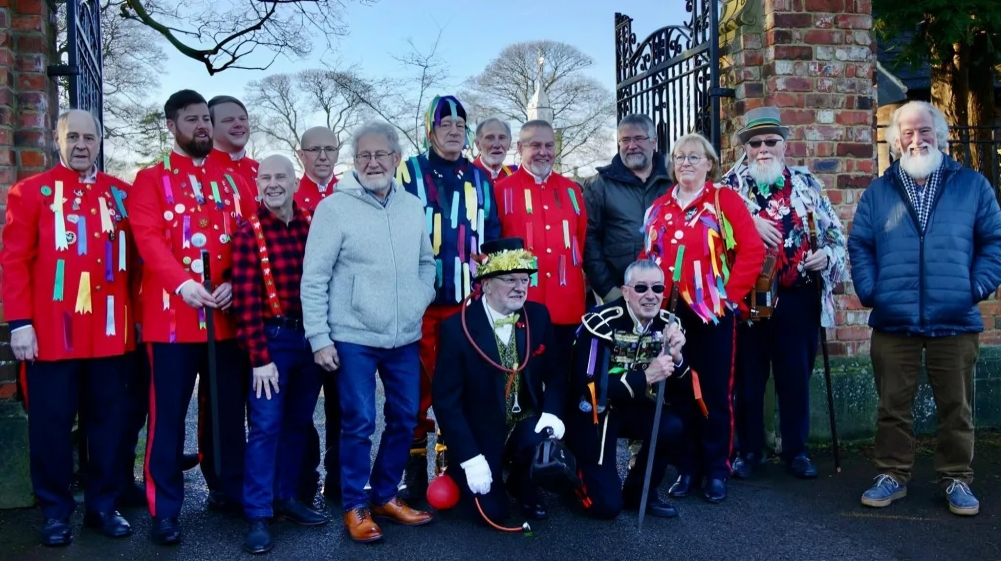
A longsword dancing troupe in Redcar, which has brought a centuries-old tradition back from the brink of obscurity, is now facing a new challenge: securing its future by attracting younger members.
The Redcar Sword Dancers were founded in 1967, sparked by the discovery of an old journal by a member of the Redcar Folk Club. The journal contained detailed instructions for a traditional dance, as well as a short play to accompany it. Enthusiastic volunteers began meeting to practise the intricate steps and theatrical elements, reviving a tradition that had long lain dormant.
Brian Pearce, the “King” of the Redcar Sword Dancers, expressed concern over the group’s ageing membership. “We are all a bit long in the tooth now,” he admitted, “and it has been increasingly difficult to inspire younger people to join us. It has been a pleasure and an honour to keep this tradition alive, but I worry for its future if we cannot pass it on.” At 78, Mr Pearce has dedicated decades to preserving this unique form of folk art, which has been a part of Greatham’s local heritage for more than 200 years.
The performance is not just a dance but a story in motion. It features a dramatic scene in which a character is symbolically beheaded and then revived by a doctor, blending theatrical storytelling with precise, rhythmic sword movements.
Moira Clarke, the group’s musician for the past 25 years, highlighted the integral role of music in the performance. “There is a real beauty to the longsword dance,” she said. “The music and the steps are inseparable. I always try to enhance the dance with the music, to make the performance as alive and captivating as possible. But without fresh recruits, I fear that the tradition may vanish. We owe it to future generations to keep it alive.”
The Redcar Sword Dancers now appeal to anyone with an interest in local heritage, theatre, or folk dance to join them. For the troupe, recruiting new members is not just about sustaining a hobby—it is about safeguarding a living piece of history for the community and for generations yet to come.
Source: BBC